Ski Accident Lawyer in Placer County
You came down the mountain hurt, a little shaken, and not sure what happens next. Here's the friendly, step-by-step version — what to do in the first 72 hours, what's actually worth worrying about, and when to call someone like me.
After a ski accident in Placer County, the first 72 hours matter more than the next two years: get a ski patrol report before leaving the resort, photograph the scene and your gear, collect witness names, get same-day medical care even if you feel okay, decline recorded statements to insurance adjusters, write down your timeline while it's fresh, and talk to a ski accident lawyer in Placer County before the week is out. Cases arising at Palisades Tahoe, Northstar, Sugar Bowl, or Boreal are filed at the Bill Santucci Justice Center in Roseville. California gives you two years to file suit — but lift-scan data and resort camera footage can vanish in days. Consultations are free, and cases are handled on contingency — no fee unless we win.
If you're reading this on your couch with an ice pack, welcome — you're in good company. Somewhere between the resort clinic and the drive down I-80, the adrenaline wears off, the ache sets in, and the questions arrive all at once: Is this worth a claim? Did I ruin everything by not getting that guy's last name? Am I overreacting? Take a breath. Most people in your position did a few things right and missed a few things — and the missed ones are often fixable. Here's the friendly version of what actually matters in the first 72 hours.
First things first: you're probably more okay than you fear — and maybe less than you think
Two things are true at once after a ski crash. Most soreness really is just soreness, and most cases never need a lawyer at all — I'll tell you that on the phone, happily, in about five minutes. But concussions, fractures, and ligament tears all have a well-documented habit of introducing themselves politely and then getting worse over the weekend. So step zero is boring and non-negotiable: get looked at, same day, even if you feel mostly fine. It's good for your health, and yes, it creates the medical record that ties the injury to the day on the mountain. Both matter.
The seven steps worth taking in the first 72 hours
- 01Get a ski patrol report on the books.If you're still at the resort, ask patrol to write it up before you leave — and if you've already left, call the resort and ask for their incident report process. This report anchors the date, the run, the conditions, and the witnesses. It's the single most useful document in any ski case.
- 02Photograph everything, including the boring stuff.The spot where it happened (approach and landing if it's a feature), signage, your skis or board as they were, your helmet, and — trust me on this — your lift ticket or pass receipt. If the resort was involved, that paper trail matters.
- 03Collect the humans.Witnesses are the crown jewels of ski cases, and they evaporate by the parking lot. Names and phone numbers of anyone who saw it, anyone who stopped, anyone who was filming. If the other party was involved, their full name and contact — not just a first name and a jacket color.
- 04Get that same-day medical visit.The resort clinic, urgent care back in Roseville, or your own doctor — anywhere that documents 'injured today, skiing.' A gap of even a few days gives insurance companies their favorite argument: that something else must have happened in between.
- 05Politely decline the insurance calls.If an adjuster calls — yours or anyone else's — be friendly and brief: confirm an incident occurred, decline a recorded statement, sign nothing. 'I'm still getting evaluated and I'll follow up in writing' is a complete sentence. Recorded statements in week one exist to be used in month six.
- 06Write the timeline while it's warm.Ten minutes, notes app, stream of consciousness: where you were on the mountain, what you remember, what hurt when, who you talked to, what they said. Your future self — and possibly your lawyer — will be very grateful. Memory fades fast; contemporaneous notes carry real weight.
- 07Make one phone call to a lawyer.Not because you necessarily have a case — because the time-sensitive moves (preservation letters for lift-scan data and resort camera footage) are a lawyer's to send, and the window is days, not months. The call is free, and 'you don't need me for this' is an answer I give cheerfully and often.
The two mistakes that quietly ruin good cases
After years of these files, the pattern is almost never 'the injury wasn't real.' It's one of two quiet mistakes. The first is the social media post — the smiling photo from the couch captioned 'all good!' that shows up in a defense exhibit nine months later while you're still in physical therapy. If you're hurt, let the internet hear about it later. The second is the friendly recorded statement, where a trained adjuster asks 'how are you feeling?' and your reflexive 'doing okay, thanks!' becomes a deposition quote. You don't have to be rude. You just have to be brief.
Do you actually have a case? The honest shortcut
Here's the friendly version of the legal test, no law degree required. California says the mountain's natural risks — ice, your own caught edge, an ordinary tumble — belong to you. But a case exists when someone else added danger to the mountain: a skier or rider who was reckless (not just clumsy — reckless), a resort that built or maintained something badly, a lift that malfunctioned, a rental shop that set your bindings wrong, or an employee who created the hazard. If your story has a 'someone else did something wrong' in it, it's worth the free call. If it was genuinely just a bad fall, I'll tell you that too, and you'll hang up with a clear head.
The Placer County part
One nice thing about getting hurt at Palisades, Northstar, Sugar Bowl, Boreal, or Soda Springs: legally, it's a Placer County case. That means your lawsuit — if it ever comes to that — is filed at the Bill Santucci Justice Center on Peckham Road in Roseville, probably twenty minutes from your house, and your medical care runs through the Roseville corridor you already know. The mountain is ninety minutes away; everything about your case is close to home. And if you were visiting from out of the area, the same applies — you just get a local who knows the courthouse.
Ski accident lawyer Placer County — quick answers
Do I really need a ski accident lawyer in Placer County, or can I handle the claim myself?+
Honestly, minor injuries with clear facts can sometimes be handled solo. The moment any of these show up, get help: a fracture, surgery, a concussion, a disputed story about what happened, a resort involved, or an adjuster asking for a recorded statement. Ski cases also have a hidden trap — the inherent-risk doctrine — that lets insurers deny claims that are actually valid. The consultation is free, so the decision costs you fifteen minutes.
How long do I have to file a ski accident lawsuit in California?+
Two years from the date of the injury for most cases. If a government entity is somehow involved (a county vehicle on resort roads, for example), a written claim is due within six months. But don't plan around two years — lift-scan data and resort camera footage can disappear in days, which is why the first week matters most.
I signed a waiver with my lift ticket. Does that kill my case?+
Usually not. Waivers cover the ordinary risks of skiing and a resort's ordinary negligence. They don't cover gross negligence, chairlift failures (lifts are common carriers with the highest duty of care in California law), reckless skiers or riders who hit you, or defective rental equipment. Bring the waiver question to a free consult — it's often the best news of the call.
The crash was partly my fault. Should I even bother calling?+
Yes. California uses comparative fault — your recovery is reduced by your share of responsibility, not eliminated by it. Plenty of valid cases involve a skier who was going a bit too fast and a resort whose feature was built wrong. Being partly at fault changes the math, not the right to call.
How much does a ski accident lawyer in Placer County cost?+
Nothing up front and nothing out of pocket. Cases are handled on contingency — the fee is a percentage of what we recover, and if we recover nothing, you owe no fee. Case costs (experts, records, filing fees) are advanced by the firm. The first consultation is free with no obligation.
I was visiting from out of state when I got hurt at a Placer County resort. Can you still help?+
Absolutely — and you're not alone, since a huge share of Tahoe-area visitors come from the Bay Area, out of state, or abroad. The case is filed where the accident happened (Placer County, heard in Roseville), and nearly everything — consultations, records, most of the process — can be handled remotely. You'd rarely need to travel back.
What if I feel fine now but start hurting in a few days?+
Very common, and not too late — but get medical care as soon as symptoms appear, and say clearly that you were in a ski accident and when. Delayed concussions and soft-tissue injuries are real and documentable; what hurts your case is a long, unexplained gap. Then make the call — the sooner the paper trail starts, the stronger it reads.
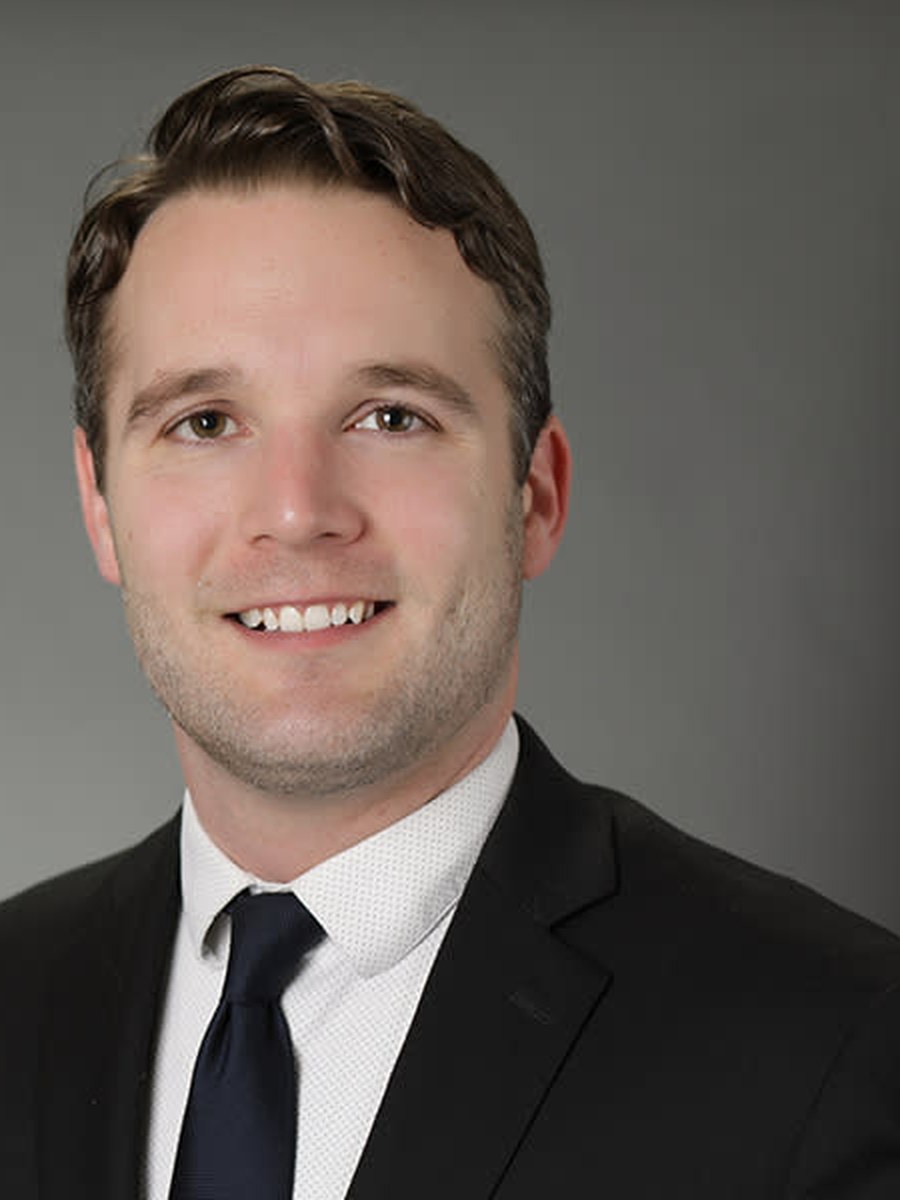
Joe Helfrick is a Sacramento-born trial attorney representing the seriously injured throughout Sacramento County and Placer County. B.A. History, Holy Cross College of Notre Dame (2010). J.D., Lincoln Law School (2015) — Faculty Achievement Award, Legal Analysis. Admitted to the California State Bar (2017) and the U.S. District Court, Eastern District of California (2020).
Talk to Joe. The first call is free.
Free, confidential, no obligation. You pay nothing unless we recover money for you.