Truck Accident Attorney in Sacramento, CA
A Sacramento truck accident attorney's honest take on the five scenarios that make up almost every big-rig case we handle — from the rear-end on the Cap City Freeway to the wide-turn that clips a Prius in West Sac.
A truck accident attorney in Sacramento, CA handles crashes involving semis, tractor-trailers, delivery trucks, and other commercial vehicles across the region — I-80 through Roseville, I-5 through downtown, US-50 to Rancho Cordova and Folsom, and Highway 99 to Elk Grove. Case value depends on the type of wreck, the trucking company's coverage stack (usually $750K minimum, often several million in excess), and how fast the evidence gets preserved. Statute of limitations is two years (CCP § 335.1). All cases are handled on contingency — no fee unless we win.
People think a truck case is a truck case. It isn't. The kind of wreck matters — not just for what happened to your body, but for who's at fault, how big the insurance stack is, and how the case actually plays out over the next eighteen months.
After enough of these, you notice patterns. In our office, in Sacramento, five scenarios cover almost everything that comes through the door. Here's what each one looks like when you break it apart.
1. The rear-end on 80
By volume, this is the most common truck case in the Sacramento region. Traffic slows unexpectedly on I-80 between the Watt Avenue overpass and the Cap City Freeway split — construction zone, or the classic afternoon Roseville-bound backup — and an 18-wheeler behind you either doesn't see it or can't stop in time. A fully loaded semi at highway speed needs the length of a football field to stop. Passenger cars in front don't have that kind of runway.
Liability on these is almost always the truck driver's. What the case actually turns on: driver fatigue (hours-of-service violations in the ELD), distraction (phone records), and whether the trucking company enforced its own safety policy. Nine times out of ten, the file gets built out of the electronic logs, the ECM data, and whatever dashcam footage the fleet was — or wasn't — running.
2. The jackknife on the Sierra pass
Winter is coming up 80 to Truckee. The chain controls are on. A semi driver either doesn't chain up when he was supposed to, or he brakes too hard, or he's just tired. The trailer swings out. Now you have 40 tons of steel sliding sideways across two or three lanes and taking every car in reach with it.
The unique thing about a Sierra jackknife case is the weather and the CHP report. Snow-related collisions get a very specific write-up, and there's usually a lot of finger-pointing about visibility and reasonable speed. What we're really looking at is whether the driver followed his own company's inclement-weather protocol, whether the chain-up call was appropriate, and whether the tractor's brakes were within DOT spec at the last inspection.
3. The wide-turn in the warehouse district
West Sacramento. South Sacramento. The industrial pockets around Power Inn Road. A delivery truck making a right turn out of a distribution yard has to swing wide — sometimes into the oncoming lane — to clear the turn. A car in the right lane doesn't understand what's about to happen and gets pinned against the curb. Or the truck's right-side blind spot swallows a bicyclist or a motorcyclist.
These are technically "lower-speed" cases and defense counsel loves that framing, because it undercuts injury value. But truck wide-turns produce crush injuries and long-term orthopedic damage all the time. And the liability question — did the driver clear his blind spot, did he signal, was the trailer over the line — is usually clean.
4. The underride
This is the one nobody wants to talk about. A passenger vehicle collides with the side or rear of a trailer and slides under it. The trailer's rear underride guard is supposed to stop this from happening. Very often it doesn't. Underride crashes are usually catastrophic — decapitation-level injuries, or fatal.
Underride cases in California have two moving parts. The negligence side (who caused the initial collision) is the ordinary trucking analysis. The product-liability side (did the underride guard perform to federal standard, FMVSS 223 and 224) is a whole separate case against the trailer manufacturer. Big cases. Serious experts. This is the kind of file that requires both a trucking specialist and a product-defect specialist working together.
5. The cargo-securement failure
Pipe rolls off a flatbed on Highway 99. Steel coils shift and the whole rig rolls on I-5. A container comes loose on 80 near Elverta. Cargo cases are a specific niche because the defendant is often the shipper — the company that loaded and secured the freight — not the trucking company itself. FMCSA cargo-securement rules (49 CFR Part 393, Subpart I) are extremely specific about tie-downs, load-securement working limits, and inspection requirements.
Which means when we get a cargo case, we're not just fighting the trucking company's insurer. We're bringing in the shipper's insurance too — and that opens up an entirely different (usually larger) coverage pool.
What actually matters on your first call
You don't need to know which of these five categories your case fits before you call. That's what the intake conversation is for. But three things do matter right away:
- How long ago did the wreck happen? (Days, not weeks — evidence starts disappearing at day 30.)
- Do you already have the CHP or local PD case number? (Not required, but it saves time.)
- Have you talked to the trucking company's insurance yet? (If yes, that's fine — we'll deal with it. If no, don't.)
That's it. The rest — the medical records, the ELD data, the maintenance history, the driver's file, the shipper's paperwork — is our job.
One thing to be honest about
Not every truck-vs-car case is a truck case. Sometimes the driver of the passenger vehicle really did cut off the semi. Sometimes the coverage is limited enough that the case is smaller than the injuries make it feel. An honest Sacramento truck accident attorney will look at the police report, the physical evidence, and the coverage picture before making promises. If we can help, we say so. If we can't, we say that too — and try to point you to someone who can.
Truck accident attorney Sacramento, CA — quick answers
Is there a difference between a truck accident attorney and a truck accident lawyer in Sacramento?+
No. "Attorney" and "lawyer" mean the same thing in California — both are terms for someone licensed by the State Bar. Some firms use one and some use the other. It has no bearing on qualifications or experience.
How much is a Sacramento semi-truck accident case worth?+
There is no honest average. Cases range from a few thousand dollars for a low-speed contact with a minor injury to eight-figure recoveries in catastrophic and wrongful-death cases. Value is driven by liability clarity, the medical evidence, and — critically — the trucking company's total available insurance limits (federal minimum is $750,000 but many carriers stack excess coverage into the millions).
How long do I have to file a truck accident case in California?+
Two years from the date of the crash under Code of Civil Procedure § 335.1. Six months if a public entity is involved (a public bus, a city truck, or a Caltrans vehicle) under Government Code § 911.2. But the practical deadline is much shorter — the truck's electronic control module data, driver logs, and dashcam footage are routinely destroyed inside of 30 to 90 days.
The trucking company already called and offered me money. Should I take it?+
Not before talking to a truck accident attorney in Sacramento. Fast offers made in the first few weeks after a crash are almost always a fraction of what the case is worth, and they usually come with a general release that shuts down all future claims — including the medical care that hasn't happened yet.
What if the truck driver was based in another state?+
Interstate commercial motor carriers are governed by the federal Motor Carrier Safety Regulations regardless of where the driver lives. Sacramento is the proper venue if the crash happened here, and the case can usually be filed in either state court or the U.S. District Court for the Eastern District of California, depending on the amounts and the defendants involved.
What if a family member was killed in a Sacramento truck crash?+
California recognizes both wrongful-death claims (brought by qualifying family members under CCP § 377.60) and survival claims (brought by the estate under CCP § 377.30). These are handled quietly and thoroughly, without pressure on the family, and are still on a two-year clock.
How much does a truck accident attorney in Sacramento cost?+
Contingency. No attorney's fee unless we recover money for you. Case costs are advanced by the firm and reimbursed only from a recovery. The consultation is free — and if the case isn't a fit, we'll tell you.
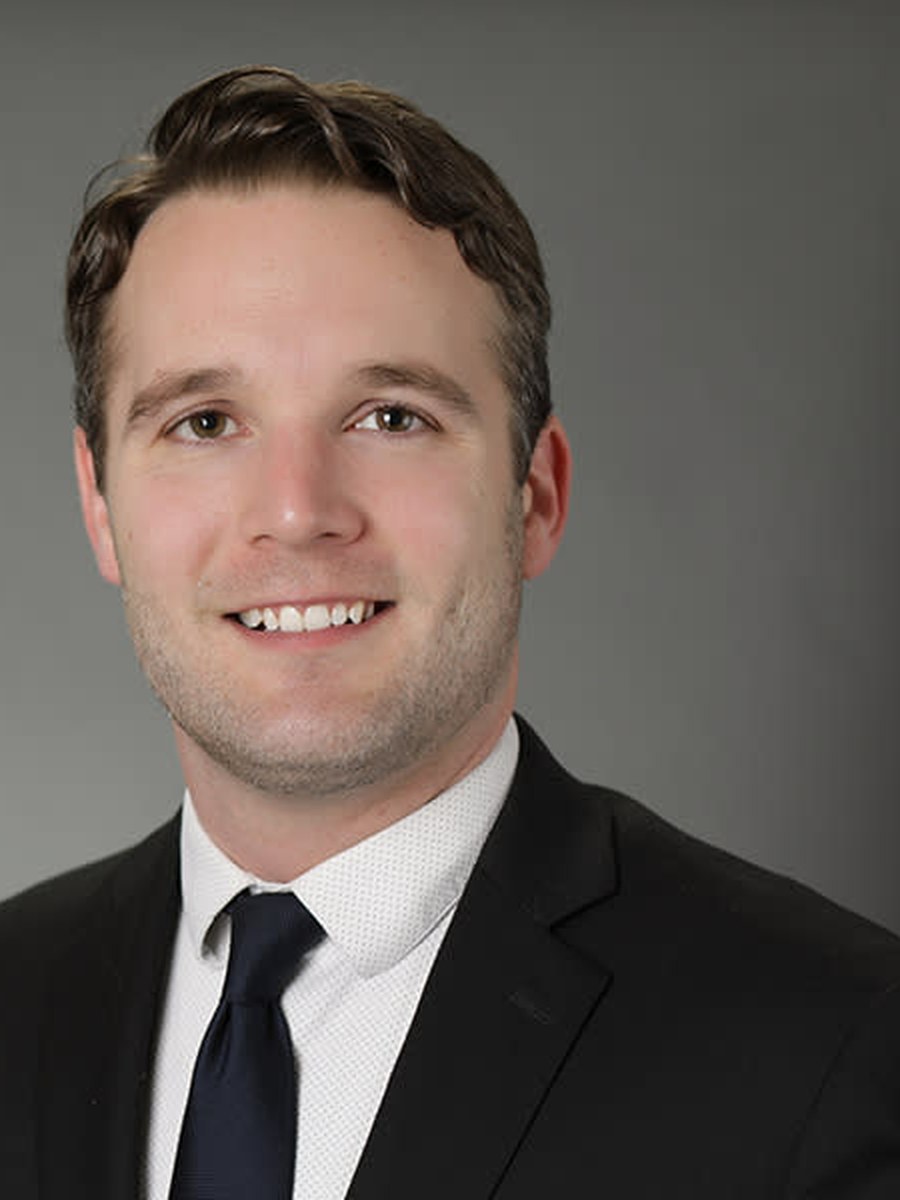
Joe Helfrick is a Sacramento-born trial attorney representing the seriously injured throughout Sacramento County and Placer County. B.A. History, Holy Cross College of Notre Dame (2010). J.D., Lincoln Law School (2015) — Faculty Achievement Award, Legal Analysis. Admitted to the California State Bar (2017) and the U.S. District Court, Eastern District of California (2020).
Talk to Joe. The first call is free.
Free, confidential, no obligation. You pay nothing unless we recover money for you.